How long does antibody development actually take?
Antibody development means two different things. Reaching a binder you have tested takes weeks to months and depends on the route. Reaching a clinical candidate takes years, and discovery is a small part of it. Both numbers, what sits between them, and where programmes actually lose time.

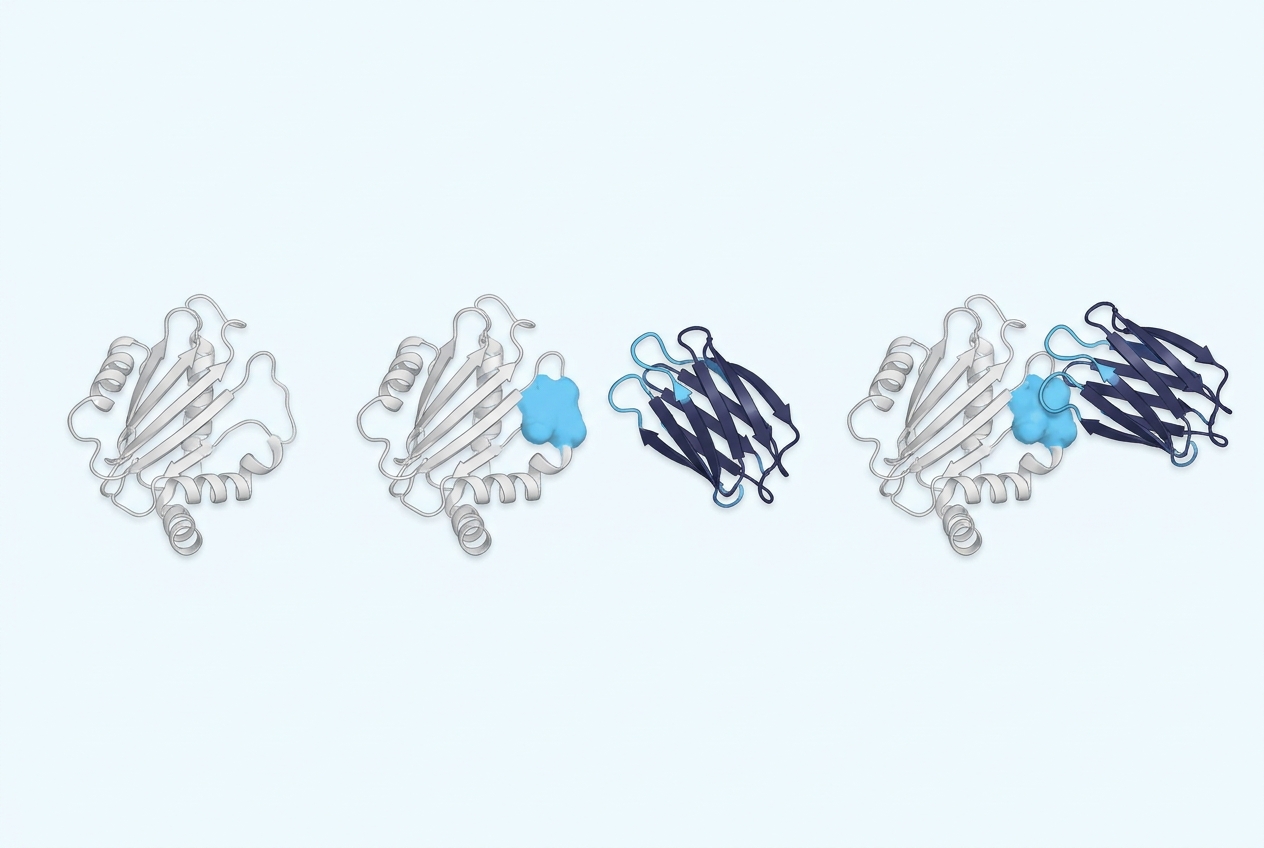
Antibody development takes anywhere from six weeks to several years, and the answer depends on where you stop counting. Reaching candidate sequences that bind your target is a matter of weeks or months, and the route you choose changes that number substantially. Reaching a molecule that can enter the clinic takes years, and discovery is a small fraction of it. Confusing the two is the most common source of disappointment in antibody programmes, so this note gives both numbers, sets out what sits between them, and says where the time actually goes.
Antibody development means two different things
Ask a research scientist and the answer is the time to a binder they have tested. Ask a development director and the answer is the time to a molecule that can be dosed in a patient. The two differ by years, and most published timelines fail to say which one they are quoting. This note answers both and keeps them apart. The stage we shorten is the first one, and we say so, because claiming that a faster discovery stage transforms a clinical timeline would not survive the first technical conversation.
What each antibody development route costs you in time
These are our working ranges from go-ahead to a characterised binder, drawn from the programmes we see rather than from a published dataset. Treat them as orders of magnitude rather than as benchmarks.
| Route | To first candidates | To a validated binder | What sets the floor |
|---|---|---|---|
| Immunisation and hybridoma | 4 to 6 months | 6 to 9 months | The immune response, then fusion and subcloning |
| Immune library plus phage display | 3 to 5 months | 5 to 7 months | The same immune response, then panning rounds |
| Synthetic library plus phage display | 6 to 12 weeks | 3 to 5 months | Panning rounds and antigen supply |
| Computational design | 6 weeks | 12 weeks | Design cycle, then expression and testing |
The second row surprises people. An immune library is built from an animal that has already been immunised, so it inherits exactly the same immune floor as the hybridoma route. It finishes earlier because panning a library is faster than fusing, screening and subcloning hybridomas, which is where the saving comes from, since the animal is no quicker.
Two factors explain most of the spread:
- An immune response has a fixed duration: immunisation schedules run over weeks to months and no amount of resource compresses them, so any route that starts with an animal inherits that floor.
- Antigen supply is often the real timeline: a display campaign needs purified antigen in a native-like form, immobilised. For a membrane protein or a heavily glycosylated target, producing it can take longer than everything downstream put together. Design works from a structure instead, which is why it sometimes starts months earlier on the same programme.
Inside a twelve-week design cycle, week by week
Six weeks from the antigen to candidate sequences, and twelve weeks to binders validated in the laboratory, is the cycle we run at Immunochem. What occupies that time:
- Before the clock starts, the feasibility study: we assess the target structure and the site you want engaged, and tell you whether a campaign is worth running. It is free and takes a day or two. It is also where we say no, which happens, and which serves both sides better than discovering it in week ten. The criteria are in our note on choosing which site to target.
- Weeks one and two, setting up: preparing the target structure, defining the epitope, fixing the framework and the constraints the campaign must respect. Where distance from existing sequence claims is required, the threshold is agreed now, because it shapes the design space instead of filtering it afterwards.
- Weeks two to four, generation: backbone generation against the chosen site, sequence design, and independent structure prediction on every candidate to confirm it folds and docks as intended. This produces thousands of designs, most of which are discarded.
- Weeks four to six, filtering: structural confidence, predicted interface quality and developability descriptors applied together rather than one after another. Where a patent constraint applies, identity to the claimed sequences is computed per CDR and across the variable domain. The output is the candidate set, and this is the six-week deliverable.
- Weeks six to nine, expression: candidates are produced in a cell-free system, which goes from DNA to protein in hours. Those that cannot be produced are eliminated here, at the cheapest possible point. Expressing in a cell-free system is a screen rather than a test of manufacturability, which is established later in the production system you intend to use.
- Weeks nine to twelve, binding and reporting: ELISA against the target, with controls, to separate real binders from merely sticky molecules. The report covers what bound, what did not, and the attrition across the funnel.
Why a shorter cycle improves your odds as well as your calendar
From a tested binder to a molecule entering clinical trials is a matter of years. What sits in between:
- lead optimisation and affinity maturation
- reformatting into the final construct, with its own characterisation
- functional characterisation in cell-based assays, where many candidates stop
- developability and manufacturability work on the lead and a backup
- cell line and process development
- toxicology, GMP manufacture of clinical material, and regulatory submission
Against that, saving three or four months on discovery is worth having and no more.
The argument is elsewhere, and it is about what you carry into the next stage:
- You arrive with candidates already filtered: aggregation propensity, surface hydrophobicity, charge distribution and chemical liability motifs are computed before anything is synthesised, so the failures that are expensive to find after lead selection are removed while removing them still costs only compute. This is the subject of our note on developability by design.
- You know what you are holding: each candidate was designed against a site you named, tested against the target, and measured against any prior art you specified. That is a narrower claim than most discovery campaigns can make, and a more useful one.
- You can afford to be wrong: several targets can be assessed through the free feasibility study before any campaign is committed, so a target that fails does not take the programme with it, and a liability found late can be designed around in weeks.
- A target that was out of reach becomes workable: where the antigen cannot be produced in a native-like form, display has nowhere to start. Design works from a structure.
The economics follow from this rather than from the calendar. A developability problem found after lead selection costs a cell line campaign; found before synthesis it costs nothing.
One limit applies. In the RFantibody study, initial designs bound in the tens to hundreds of nanomolar range and needed an affinity maturation step afterwards (Bennett et al., Nature 2026, 649:183-193, DOI). Reported success rates also run from roughly 10% to 100% depending on the target (Pacesa et al., Nature 2025, 646:483-492, DOI). Both references were located through PubMed. Anyone quoting a single universal hit rate is quoting a number the literature does not support.
Where antibody development programmes lose time
In our experience the time is rarely lost where people expect.
- Antigen production, repeatedly: a target that will not express in a native-like form stalls everything downstream of it.
- Deciding what you want: programmes that start before the epitope requirement, the format and the intended mechanism are settled tend to redo work later.
- Developability found after lead selection: the most expensive avoidable delay, because it forces a choice between engineering the problem out of a chosen molecule and going back to the panel.
- Functional characterisation is a programme in itself: obtaining binders is easier than obtaining binders that do the intended thing, and assay development often takes longer than generation did.
- The handover between stages: material transfer, contracts and scheduling between providers routinely cost more time than the science.
Receive a feasibility study on your antigen - for free
Frequently asked questions
How long does it take to develop a monoclonal antibody?
To a validated binder, five to nine months by the immunisation-based routes, and twelve weeks by computational design, with candidate sequences at six weeks. To a clinical candidate, years, most of which sits downstream of discovery and is unaffected by how the binder was generated.
Why is computational design faster?
It removes the immune response and the panning rounds, and it does not wait for antigen production because it works from a structure. The generation step becomes compute time instead of biological time.
Can you really deliver sequences in six weeks?
That is our working timeline from go-ahead, and it assumes a usable structure and an agreed epitope. The free feasibility study happens before the clock starts and tells us whether the target supports it.
What slows an antibody development programme down the most?
Antigen production, unclear requirements at the start, and developability found after a lead has been selected. None of them belongs to the generation step itself.
Does a faster discovery stage shorten time to market?
Only by the months it saves at that stage. The real benefit is reaching the next stage with candidates already filtered on developability, and being able to assess several targets before committing to any.
How long does affinity maturation take?
Our working estimate is three to nine months, depending on the method and the starting point, and it is an estimate rather than a published figure. Designed binders generally need it, since the designs in the RFantibody study started in the tens to hundreds of nanomolar range, as discussed in our comparison of display and design.
Want a timeline for your specific target?
Receive a feasibility study on your antigen - for free